HINTS vs Sudbury Vertigo Risk Score title graphic featuring a brain and inner-ear illustration.

MDCalc Wars: HINTS vs Sudbury Vertigo Risk Score — Which Tool Fits the Dizzy Patient?

🧭 REBEL Rundown

🗝️ Key Points

  • 👀 HINTS requires the right patient: Ongoing acute vestibular syndrome with nystagmus—and a trained examiner.
  • 🧮 Sudbury assesses broader risk: It estimates the likelihood of serious central diagnoses in patients with dizziness, vertigo, or imbalance.
  • 🚩 Concerning HINTS findings demand action: Central or equivocal results warrant stroke evaluation and appropriate neuroimaging.
  • ⚠️ A low Sudbury score doesn’t override red flags: Concerning symptoms or examination findings still require investigation.
  • 🩺 Clinical assessment comes first: Both tools support a thorough history, neurologic examination, and clinical judgment.

🤕 Case

A 72-year-old man presents to the ED with sudden-onset dizziness and unsteady gait after getting up from his recliner. He insists it’s “just my vertigo,” although his wife is considerably less convinced. His neurologic exam is reassuring, or so you think. Is this peripheral vertigo, or could you be missing a posterior circulation stroke?

🔗 Scoring Tools

🎯 Quick Hits

Chart comparing HINTS and the Sudbury Vertigo Risk Score by purpose, patient selection, examination components, and next steps.

💬 Case Resolution

Our patient has persistent dizziness, spontaneous nystagmus, and gait unsteadiness. The Sudbury score helps frame his overall risk for a serious diagnosis, while his acute vestibular syndrome makes HINTS an appropriate bedside assessment. A central HINTS finding prompts further evaluation and MRI, which reveals a small posterior circulation stroke. His wife was right (of course!): it wasn’t “just his vertigo.”

The takeaway? HINTS and Sudbury aren’t competitors. They approach the evaluation of dizziness differently. Know your patient and your expertise with the HINTS exam, then choose your tool.

🚨 Clinical Bottom Line

  • HINTS: A focused bedside eye exam for appropriately selected patients with acute vestibular syndrome (AVS). When performed by trained clinicians, signs of brain dysfunction should raise concern for posterior circulation stroke.
  • Sudbury: A broader risk-stratification score for ED patients with dizziness, vertigo, or imbalance that uses demographics, vascular risk factors, neurologic findings, and BPPV diagnosis to estimate the risk of a serious underlying cause.

Post Peer Reviewed By: Marco Propersi, DO (Twitter/X: @Marco_Propersi), and Mark Ramzy, DO (X: @MRamzyDO)

❓ FAQ

  1. What is the difference between HINTS and the Sudbury Vertigo Risk Score?
    HINTS is a bedside eye examination that helps distinguish central from peripheral causes of acute vestibular syndrome. The Sudbury Vertigo Risk Score uses clinical findings and risk factors to estimate the likelihood of a serious central diagnosis in a broader group of patients with dizziness.
  2. When should clinicians use the HINTS exam?
    Use HINTS in patients with ongoing acute vestibular syndrome and nystagmus, provided the examiner has appropriate training. It is not a general screening test for every patient with dizziness. 
  3. Can HINTS be used to diagnose BPPV?
    HINTS is not intended for typical brief, position-triggered episodes suggesting benign paroxysmal positional vertigo (BPPV). The Dix-Hallpike test is the recommended diagnostic maneuver for suspected posterior-canal BPPV. 
  4. Does a low Sudbury score rule out stroke?
    No. A low score indicates lower estimated risk but does not exclude stroke or another serious central cause. Concerning symptoms or examination findings warrant further evaluation regardless of the score. Sudbury score guidance
  5. Can HINTS be more sensitive than an early MRI?
    Yes, when a trained clinician performs it in appropriately selected patients with acute vestibular syndrome. MRI can miss posterior circulation ischemic strokes during the first 24–48 hours. Persistent clinical concern requires further assessment even when an early MRI is negative.
  6. What should clinicians do with a central or equivocal HINTS result?
    A central or equivocal result warrants urgent evaluation for stroke or another central cause. MDCalc guidance

🧭 Prep Sheets

👤 Author

🔎 Your Deep-Dive Starts Here

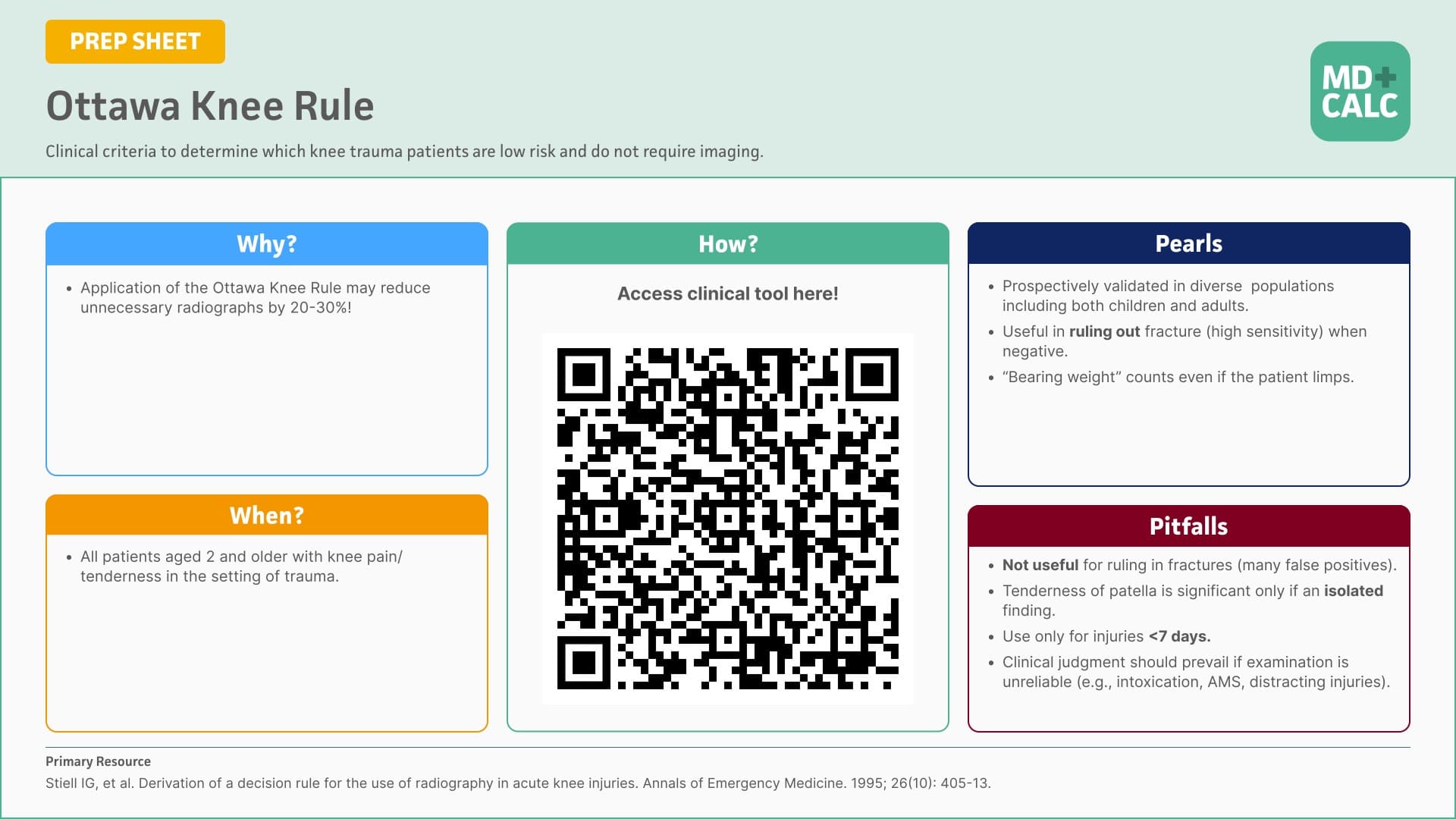
Showing Slide 1 of 6: MDCalc Wars: Ottawa vs Pittsburgh — Which Knee Rule Should You Use?
Cite this article as: Eric Steinberg DO, MEHP, "MDCalc Wars: HINTS vs Sudbury Vertigo Risk Score — Which Tool Fits the Dizzy Patient?", REBEL EM blog, September 28, 2026. Available at: https://rebelem.com/hints-vs-sudbury-vertigo-risk-score/.
Don’t Miss a Post – Follow Us
Want to support rebelem?
Get new posts (free)

1 email per week. No spam.

rebelSWAG-lightbg

Sponsored